
Professionally trained PTSD service dogs from Northwest Battle Buddies (NWBB) help their Veteran handlers live more independent lives, even as they battle post-traumatic stress disorder. But a dog trained to perform specific tasks, like interrupting a panic attack, redirecting a flashback, or providing pressure therapy, represents a major investment of time, care, and money.
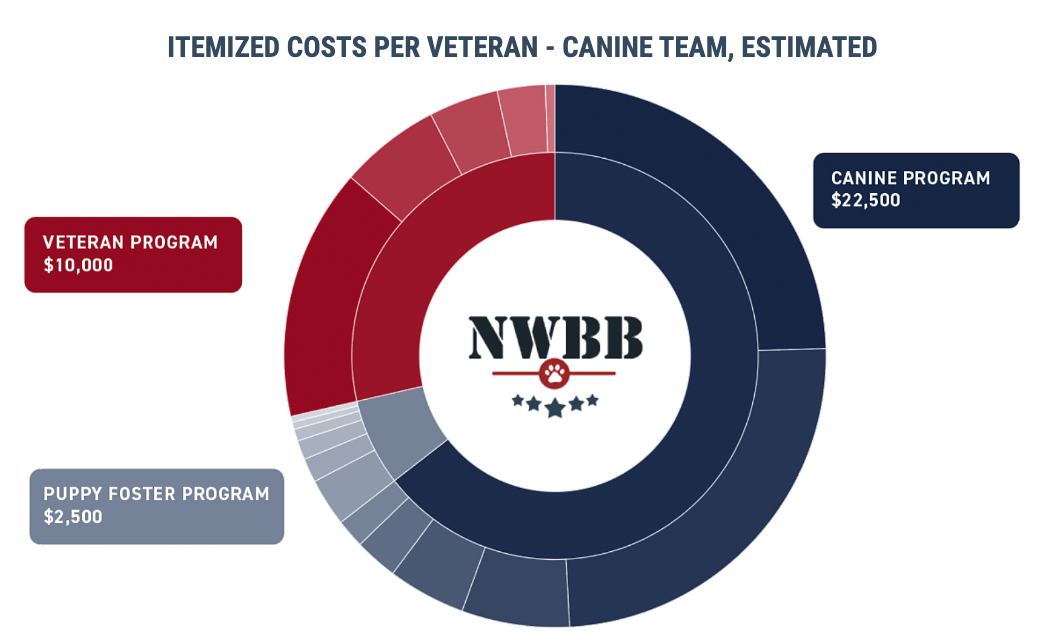
So, how much does a PTSD service dog cost? At NWBB, it costs a total of $35,000 to raise a dog from a puppy into a fully trained service dog working alongside a Veteran handler.
That $35,000 covers three phases of the dog's journey:
- Puppy Foster Program: $2,500
- Canine Training Program: $22,500
- Veteran Training Program: $10,000
For comparison, a professionally trained service dog typically costs anywhere from $15,000 to $50,000, depending on the tasks involved and the organization providing the dog. NWBB's cost reflects up to a year of fostering, five months of intensive training, and a lifetime of follow-up support.
Scroll down for the cost breakdowns
Thanks to generous donations, NWBB provides PTSD service dogs at no cost to the Veteran, so recipients only have to cover their own room and board during the five-week handler instruction course.
We rely on donations to keep offering this service to Veterans. Make a recurring monthly contribution through Operation Never Quit to help cover the ongoing cost of raising and training PTSD service dogs.

Now, let's break down where donor dollars go, and what a PTSD service dog really costs.
Puppy Foster Program: $2,500
Foster puppies from NWBB spend up to 12 months with volunteer foster families. Fosters donate their time, following NWBB's vaccination schedule and foster guidelines.
Even with all the time and money our dedicated volunteers put in, each puppy in the foster program costs $2,500 to reach the next phase of training. Here's where that cost comes from:
- Acquisitions: Sourcing the dog from an approved breeder or managing NWBB's breeding program comes to $1,000 per dog.
- Training: Training starts early. During the fostering phase, this costs $500 per puppy.
- Food, Nutrition, & Health: $400 per puppy for regular vet checks, vaccinations, and food. .
- Program Administration: The behind-the-scenes cost of running the program works out to $325 per puppy.
- Transport: Traveling to and from appointments and foster homes averages $150 per puppy.
- Materials & Supplies: From kennels and leashes to grooming tools, this category runs $120 per puppy.
And this is just the start. Once a puppy is old enough, they leave their foster family and begin intensive training in the Canine Training Program.

Canine Training Program: $22,500
Once they're ready, NWBB service dogs spend five months in an intensive training program, learning how to support their future Veteran handlers. This is the most expensive phase of the process (and for good reason!). The dogs have a great deal to master before they're ready to work.
Training Basics
In the first two months, the dogs cover the basics:
- Learning "Heel," "Walk," and "Sit" calmly under distraction at the handler's side, both on and off leash
- Following "Down" and staying in place for up to one hour
- Understanding "Here" to come to their handler off-leash under distraction
- Learning to "Load" into a vehicle on command
- Knowing "Wait" with the vehicle door open until asked to exit with "Easy"
- Ignoring all people food, even when it's right in front of them
- Maintaining a respectful, calm demeanor around people
Task Learning
In months three through five, the dogs learn tasks specific to their future handler's needs, like:
- Waking their Veteran from nightmares
- Signaling and interrupting anxiety attacks
- Redirecting flashbacks
- Alerting on adrenaline
- Acting as a social barrier in public
- Providing a constant feeling of safety
- Performing pressure therapy
All of this training takes place in multiple public locations, such as grocery stores, airport security, buses, and movie theaters, to simulate the real situations a dog is likely to encounter with its handler.
Cost of Service Dog Training Breakdown
Here's how the $22,500 for the Canine Training Program breaks down:
- Training: The core of this phase, professional training, averages $8,600 per dog over five months.
- Boarding: Housing the dogs throughout training averages another $8,600 per dog.
- Program Administration: Training and recruiting staff, scheduling, accounting, budgeting, and more average $2,200 per dog.
- Materials & Supplies: Kennels, grooming tools, harnesses, and other materials run about $1,600 per dog.
- Health & Wellness: Vet visits and related care add up to $900 per dog.
- Food & Nutrition: During training, this runs about $600 per dog.
From puppyhood through the end of the Canine Program, each dog costs about $25,000. Once training wraps up, the dog is paired with a Veteran handler and the work continues.
The high cost of this intensive training is one reason donations are essential to keeping our programs running. Make a contribution to help put PTSD service dogs in the hands of the American Heroes who need them!
Veteran Training Program: $10,000
A fully trained service dog is only half of the team. Veterans need training too, so they can confidently handle their dog and put its skills to work in everyday life. Veteran recipients complete a five-week handler-instruction program with their PTSD service dog. During those five weeks, the handler and their service dog will:
- Be assessed and paired based on lifestyle and personality factors
- Learn basic training and handling skills
- Work on- and off-leash in a simulated public environment at the training center
- Spend overnights together to integrate the service dog into the Veteran's daily life
- Complete public access training in the field (malls, restaurants, grocery stores, and other real-world settings).
After training concludes, NWBB provides a lifetime of follow-up and team support to Veterans and their service dogs, including annual recertification and any additional training they need.
Cost of Veteran Training Breakdown
The cost per Veteran handler averages about $10,000. Here's where that number comes from:
- Lodging: A dog-friendly place to stay during the five-week training comes out to about $5,250.
- Per Diem: Daily expenses like food during training average about $2,100.
- Training: Trainers working with the service dogs and handlers during this phase, plus associated costs, run an estimated $1,450 per person.
- Program Administration: The behind-the-scenes cost of running the program breaks down to about $1,000.
- Travel: Visiting different locations during public access training averages about $200 per Veteran.
Altogether, these expenses add up to an estimated $35,000 per PTSD service dog, from a puppy's first day in foster care to a fully trained team ready to face the world together.
Frequently Asked Questions About How Much a PTSD Service Dog Costs
Does the VA pay for a PTSD service dog? Generally, no. The U.S. Department of Veterans Affairs doesn't currently cover the cost of the dog itself for Veterans with PTSD, though it may provide veterinary benefits for certain service dogs it approves as medically necessary. Because of this gap, organizations like NWBB rely on donor support to place PTSD service dogs with Veterans at no charge.
Are PTSD service dogs covered by insurance? Typically, no. Health insurance generally doesn't classify a service dog as a covered medical expense, so the cost usually falls to the individual or the organization providing the dog. Some handlers may be able to deduct certain service-dog expenses on their taxes, so it's worth checking with a tax professional.
Why do PTSD service dogs cost so much? The price reflects everything that goes into creating a reliable working dog: up to a year with a volunteer foster family, five months of professional training across dozens of real-world settings, veterinary care, food, equipment, and staff time. Veterans and their dogs also receive lifetime follow-up support from NWBB.
How can a Veteran get a PTSD service dog at no cost? Veterans can apply for a professionally trained PTSD service dog through NWBB at no cost. Thanks to donations, NWBB covers the full $35,000 investment. Veterans are responsible only for their own room and board during the five-week handler instruction course.
More questions? See our frequently asked questions about PTSD service dogs.
Every Dog Is a $35,000 Opportunity for Freedom and Independence
Every PTSD service dog NWBB places represents a $35,000 commitment and a life changed for one of our American Heroes. While the cost is significant, the return is priceless — a Veteran who can rejoin their family, community, and daily life with greater freedom and independence.
You can help cover the cost of the next PTSD service dog. Join Operation Never Quit with a recurring monthly gift and help put professionally trained service dogs in the hands of the American Heroes who need them most.
